Traveling through Vietnam is not only a journey across landscapes, history, and culture—it is also an immersive encounter with one of Southeast Asia’s most diverse and complex wildlife systems. As I moved from lowland deltas to dense tropical forests, from limestone karsts to winding river systems, I began to understand that the concept of the Vietnam national animal is not limited to a single species. Instead, it represents a vast, living network of animals shaped by geography, climate, history, and human interaction.
Vietnam’s fauna is inseparable from its identity. The wildlife here tells stories of survival, resilience, loss, and rediscovery—stories that continue to unfold in forests, rivers, seas, and even in the cultural memory of the nation.
A Natural Setting That Shapes Extraordinary Biodiversity
Vietnam occupies a singular ecological position in Southeast Asia. Stretching longitudinally from regions close to the equator to areas bordering the subtropics, the country forms a long, narrow corridor where climatic zones overlap rather than separate cleanly. As I traveled from the humid lowlands of the Mekong Delta to the cooler highlands near the northern border, the gradual yet perceptible shift in temperature, rainfall, and vegetation was striking. This geographical span, combined with dramatic variations in altitude and terrain, has created an exceptional mosaic of ecosystems within a relatively limited land area.
In the south, tropical monsoon forests dominate the landscape, characterized by dense evergreen canopies and year-round biological activity. Moving northward, seasonal forests appear, shaped by cooler winters and more pronounced dry periods. Along the coast, mangrove swamps thrive where land and sea converge, acting as nurseries for aquatic life and buffers against storms. Inland, dry dipterocarp forests occupy poorer soils, while limestone karst regions give rise to highly specialized habitats that support rare and endemic species. Offshore, coral reefs form some of the most biologically productive marine ecosystems in the region. In the far north and at higher elevations, montane and even alpine vegetation zones emerge, hosting species adapted to cooler and less oxygen-rich environments.
Encountering all of these ecosystems within one country fundamentally reshaped my understanding of biodiversity. The Vietnam national animal heritage is not the result of a single dominant habitat, but rather the outcome of constant ecological negotiation across diverse landscapes. Species here have evolved under conditions of fluctuation—changing rainfall patterns, seasonal temperature shifts, and fragmented terrain—forcing them to develop high levels of adaptability.
This environmental diversity directly explains the extraordinary richness of Vietnam’s wildlife. Animals have adapted not only to different climates, but also to distinct food sources, elevation ranges, and patterns of human interaction. In many areas, species occupy highly specialized ecological niches, allowing them to coexist within relatively small geographic areas without direct competition. A forest slope, for example, may support entirely different animal communities at its base, mid-elevation, and summit.
What impressed me most was how immediate and concentrated this biodiversity feels. Unlike in vast wilderness areas where wildlife can seem distant or dispersed, Vietnam’s fauna often exists in close proximity to human settlements, agricultural land, and transportation routes. Scientific estimates suggest that, on average, nearly seven animal species occur per square kilometer across the country, with population densities in some habitats reaching tens of thousands of individuals. On a global scale, this level of biological concentration is exceptional.
In this context, the Vietnam national animal concept cannot be reduced to a symbolic species. It is better understood as a collective biological identity—one shaped by geography, climate, and centuries of ecological interaction.
Wildlife as a Mirror of Vietnam’s Plant Diversity
Any serious discussion of animals in Vietnam must begin with plants. Throughout my travels, it became increasingly clear that the country’s wildlife patterns are inseparable from its vegetation structure. Forest composition, plant diversity, and seasonal growth cycles exert direct influence over where animals live, how they move, and what they eat. The Vietnam national animal system is, in many ways, a living reflection of the nation’s botanical richness.
In tropical evergreen forests, tall trees form multi-layered canopies that create distinct vertical zones. Birds forage at different heights depending on their feeding strategies, while mammals and reptiles occupy understory or ground-level niches. Insects thrive in the humid undergrowth, forming the base of complex food webs. Observing this vertical separation in action made it evident how plant structure enables high species density without ecological collapse.
Vietnam’s forests are not uniform. Lowland tropical forests give way to montane cloud forests as elevation increases, with cooler temperatures and persistent mist altering plant morphology. These changes, in turn, influence animal adaptation. Species that thrive in lowland heat may be entirely absent just a few hundred meters higher, replaced by animals adapted to cooler, wetter conditions.
Seasonality adds another layer of complexity. In regions with distinct wet and dry seasons, animals must adjust breeding cycles, migration patterns, or feeding behavior to survive periods of scarcity. Many species associated with the Vietnam national animal heritage demonstrate remarkable behavioral flexibility, shifting diets or habitats in response to changing plant availability.
This botanical diversity allows animals to reduce direct competition. Within a single forest, species may be separated by altitude, time of activity, or preferred plant species. Some feed exclusively on young leaves, others on fruit, nectar, insects, or seeds. The result is a finely balanced ecological network in which disruption at one level—such as deforestation or plant species loss—can ripple outward, affecting numerous animal populations.
Experiencing these systems firsthand reinforced the idea that conserving Vietnam’s wildlife cannot be separated from preserving its forests. Protecting the Vietnam national animal heritage ultimately means safeguarding the plant communities that sustain it.
A Wildlife System Under Pressure
Despite its extraordinary richness, Vietnam’s wildlife exists under persistent and escalating pressure. During conversations with conservationists, researchers, and local communities, the same themes emerged repeatedly: rapid population growth, habitat fragmentation, and illegal exploitation of wildlife.
Economic development has brought undeniable benefits to Vietnam, but it has also accelerated land-use change. Forests have been cleared for agriculture, infrastructure, and urban expansion, reducing available habitat for many species. Fragmentation isolates animal populations, making them more vulnerable to genetic decline and local extinction.
At the same time, illegal hunting and wildlife trade remain critical threats. For decades, wild animals have been harvested for meat, traditional medicine, and the exotic pet trade. Even as legal frameworks and enforcement have improved, demand continues to drive poaching. It is estimated that nearly 1,000 animal species in Vietnam are currently threatened due to illegal hunting and trade.
What is particularly sobering is that even iconic representatives of the Vietnam national animal heritage have not been spared. Elephants are hunted for ivory, bears for bile, tigers for bones and skins, and pangolins for scales. These animals, once symbols of strength and abundance, now represent the fragility of Vietnam’s wildlife future.
This creates a profound tension between abundance and vulnerability. On one hand, Vietnam remains one of the most biologically diverse countries in Southeast Asia. On the other, many species persist only in isolated protected areas or small remnant populations. Experiencing this contrast firsthand—lush forests alongside empty landscapes where animals once roamed—was one of the most striking aspects of my journey.
The Long Shadow of War on Vietnam’s Ecosystems
No account of Vietnam’s wildlife is complete without addressing the ecological consequences of war. The Vietnam War left a legacy that extends far beyond human history, deeply imprinting itself on the natural environment.
During the conflict, extensive bombing campaigns and large-scale chemical spraying were carried out across southern Vietnam. Over 80 million liters of chemical defoliants—most notably Agent Orange—were dispersed over nearly a quarter of the region. These substances were designed to destroy vegetation, but their effects extended far beyond their intended targets.
Traveling through former conflict zones, I learned how forests were stripped bare, soils were poisoned, and waterways contaminated. Entire ecosystems collapsed under repeated exposure. Countless animals were killed outright, while others suffered long-term reproductive failure due to toxic residues. Species associated with the Vietnam national animal heritage either vanished from these regions or survived only in reduced numbers.
Even decades after the war’s end, recovery remains uneven. Some areas show signs of regeneration, with secondary forests gradually reclaiming damaged land. Other regions continue to struggle with persistent contamination, limiting plant growth and animal return. These ecological scars serve as a reminder that warfare can reshape biodiversity on timescales far longer than human lifespans.
The war permanently altered species distribution patterns across Vietnam. Animals that once occupied broad ranges were pushed into remote refuges. In some cases, populations never recovered. Understanding the Vietnam national animal legacy therefore requires acknowledging not only natural evolution, but also the profound impact of historical conflict.
Conclusion: A Living, Fragile Legacy
Rewriting my understanding of Vietnam’s wildlife through direct experience revealed a system of immense richness and equally immense vulnerability. The Vietnam national animal heritage is not static. It is a living, evolving network shaped by geography, plants, human activity, and historical trauma.
Vietnam’s animals embody resilience, adaptability, and complexity. Yet their future depends on choices made today—about land use, conservation, and cultural values. To experience Vietnam’s wildlife is to witness both what has survived against extraordinary odds and what still stands at risk of being lost.
Animals in Vietnamese History and Cultural Memory
To understand animals in Vietnam solely through biological classification would be to miss their deeper significance. Beyond ecology and conservation statistics, animals occupy a profound and enduring place in Vietnam’s cultural memory. Throughout my exploration of the country—whether in museums, temples, historical sites, or conversations with local communities—it became evident that animals in Vietnam are not merely living organisms. They are carriers of meaning, memory, and national identity.
Ancient texts, myths, and folk tales are populated with animals that symbolize moral virtues, cosmic balance, and historical legitimacy. Strength, wisdom, loyalty, protection, and continuity are often expressed not through abstract concepts but through animal figures. In this sense, the idea of a Vietnam national animal is less about selecting a single representative species and more about recognizing a symbolic ecosystem deeply embedded in collective consciousness.
Dragons, turtles, birds, and forest animals appear repeatedly in legends that explain the origins of dynasties, the founding of cities, and the moral order of society. These stories blur the boundary between the natural and the supernatural, positioning animals as intermediaries between humans, heaven, and the land itself. Unlike modern conservation narratives that frame animals as resources or endangered assets, traditional Vietnamese culture often presents them as guardians, teachers, or divine messengers.
One of the most powerful and widely recognized examples is the legend of the Golden Turtle, or Kim Quy. Closely associated with Hoan Kiem Lake in Hanoi, this mythical creature occupies a unique place in Vietnam’s historical imagination. According to legend, the turtle emerged from the lake to reclaim a magical sword from King Le Loi after he had successfully driven out foreign invaders. The act symbolized the restoration of cosmic balance and the return of power to the natural order.
For centuries, this story has been retold as a foundational myth of Vietnamese sovereignty. The giant softshell turtle that once lived in Hoan Kiem Lake—often referred to as the Hoan Kiem turtle—was widely regarded as a living embodiment of Kim Quy. Its rare appearances were treated as auspicious events, covered extensively by the media and discussed with reverence by the public. In this way, the turtle became a tangible expression of the Vietnam national animal spirit, linking myth, history, and living nature in a single symbol.
Animals are also preserved in more permanent form through art and architecture. The Nguyen Dynasty’s Nine Dynastic Urns (Cửu Đỉnh), cast in bronze in the 19th century, stand as monumental representations of Vietnam’s worldview. Each urn is engraved with detailed images of landscapes, plants, and animals native to the country. These engravings were not decorative choices but deliberate statements about the natural wealth and cosmic legitimacy of the dynasty.
The animals depicted on the urns—ranging from terrestrial mammals to aquatic creatures—are shown with solemn dignity. Their inclusion reflects a worldview in which wildlife was considered an integral component of the nation’s natural order rather than a commodity to be exploited. Seen through this lens, the Vietnam national animal heritage emerges as a cultural construct as much as a biological one, shaped by centuries of philosophical and spiritual thought.
Vietnam’s Wildlife Through Modern Media
While traditional culture embedded animals in myth and symbolism, modern media has played a crucial role in reshaping how Vietnamese wildlife is perceived in the contemporary world. Over the past few decades, Vietnam’s animals have gained increasing international attention through documentaries, television programs, and conservation-focused media projects.
Watching global productions such as Wildest Indochina: Vietnam – Phoenix from the Ashes or Mekong: Soul of a River, I was struck by the narrative tone commonly used to portray Vietnam. These films often frame the country as a land of contrasts—extraordinary biodiversity set against a history of war, deforestation, and exploitation. Vietnam’s wildlife is depicted as both fragile and resilient, vulnerable yet capable of recovery.
A recurring theme in these documentaries is regeneration. Forests damaged by chemical defoliants are shown slowly reclaiming abandoned land. Rivers once heavily polluted are presented as lifelines gradually restoring ecological balance. In this context, the Vietnam national animal narrative becomes one of survival rather than abundance alone. Animals are not portrayed merely as inhabitants of pristine wilderness, but as survivors navigating landscapes shaped by human conflict and development.
This framing has significant implications. It shifts the focus from loss to possibility, emphasizing conservation success stories and the potential for ecological recovery. Viewers are invited to see Vietnam not only as a site of environmental tragedy, but also as a living laboratory of resilience.
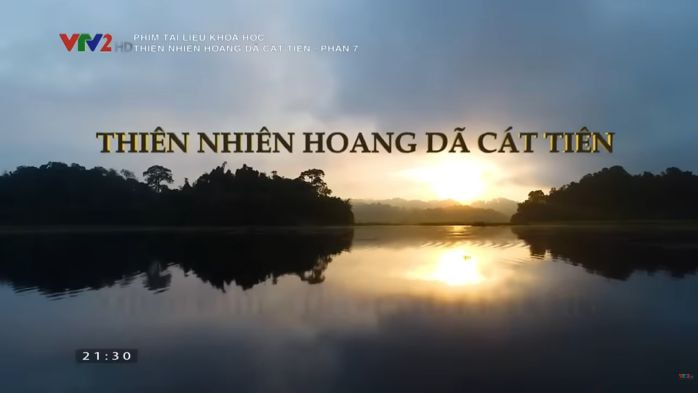
Domestic media plays an equally important role. Vietnamese television has produced numerous programs dedicated to nature, wildlife, and conservation. These shows often adopt a more intimate perspective, highlighting species familiar to local audiences and emphasizing the relationship between people and animals. Through such programs, the Vietnam national animal heritage is reintroduced to younger generations who may have grown up disconnected from forests and rural landscapes.
Importantly, modern media has also increased public awareness of endangered species and illegal wildlife trade. By bringing images of rare animals into living rooms across the country, television and digital platforms help transform abstract conservation issues into tangible concerns. In doing so, they reconnect modern Vietnamese society with a natural heritage that risks being forgotten amid rapid urbanization.
Understanding the Numbers: A Statistical Perspective
As I delved deeper into research on Vietnam’s wildlife, I encountered a wide range of statistical figures describing species diversity. At first glance, these differences seemed confusing. Depending on the source, the reported number of mammal, bird, or fish species varied considerably. However, further investigation revealed that these discrepancies reflect the dynamic nature of biological research rather than contradiction.
Vietnam is a country where new species continue to be discovered, and taxonomic classifications are frequently updated. Improved survey techniques, genetic analysis, and expanded field research have all contributed to more accurate—and often higher—species counts. As a result, statistics evolve over time.
According to data from the World Wide Fund for Nature (WWF), Vietnam hosts more than 11,000 animal species within its humid tropical climate. This includes approximately 2,470 fish species and over 23,000 coral species, underscoring the immense richness of marine ecosystems. World Bank reports document over 275 mammal species, around 800 bird species, 180 reptiles, and roughly 5,500 insect species.
Other sources suggest even higher numbers, citing over 300 mammal species, nearly 900 bird species, and thousands of marine organisms inhabiting Vietnam’s coastal and offshore waters. While the precise figures vary, they converge on a single conclusion: the Vietnam national animal system ranks among the most biologically diverse in Southeast Asia and the world.
What these numbers cannot fully convey, however, is the uneven distribution of species. Some habitats support extraordinary concentrations of wildlife, while others—particularly those heavily altered by human activity—are increasingly impoverished. Statistics provide scale, but they must be interpreted within the broader context of habitat quality, connectivity, and long-term viability.
Terrestrial Wildlife: Forest Giants and Elusive Predators
Vietnam’s terrestrial wildlife presents a dramatic spectrum, ranging from massive herbivores to elusive carnivores adapted for stealth and survival. Historically, the country’s forests supported large populations of elephants, rhinoceroses, wild buffalo, gaur, deer, and antelope. These animals shaped forest structure through grazing, seed dispersal, and migration, playing a crucial role in maintaining ecological balance.
Predators once roamed widely across these landscapes. Tigers, leopards, clouded leopards, and wild dogs occupied the top of the food chain, regulating prey populations and contributing to ecosystem stability. Today, many of these species persist only in fragmented habitats or protected areas, their ranges dramatically reduced.
Birdlife remains one of Vietnam’s greatest natural strengths. With over 800 recorded species, the country supports an extraordinary variety of avian life, from powerful birds of prey such as eagles and hawks to brilliantly colored pheasants and parrots. Numerous endemic species are found nowhere else on Earth, reinforcing Vietnam’s global conservation importance.
Among the most economically significant birds is the edible-nest swiftlet. The nests produced by these birds—used to make bird’s nest soup—are among the most valuable animal products in the region. This highlights a complex aspect of the Vietnam national animal heritage: the intersection of biodiversity, tradition, and economy. When managed sustainably, such relationships can support both livelihoods and conservation. When exploited irresponsibly, they can accelerate species decline.
Insects, reptiles, and amphibians form another critical layer of terrestrial biodiversity. Though often overlooked, these animals perform essential ecological functions, including pollination, pest control, and nutrient cycling. Frogs and reptiles serve as indicators of environmental health, their presence—or absence—reflecting changes in water quality and habitat integrity.
Together, these terrestrial animals form a complex, interdependent system. Experiencing Vietnam’s forests, both intact and degraded, made clear that the Vietnam national animal heritage is not defined solely by charismatic megafauna. It is sustained by countless smaller species whose roles are no less vital.
Aquatic Life: Rivers, Wetlands, and the Sea
Vietnam’s aquatic ecosystems are equally rich. From freshwater rivers to coral reefs, the country supports thousands of fish species, including economically valuable tuna, mackerel, grouper, and snapper.
Shrimp, crabs, mollusks, sea cucumbers, turtles, whales, and sharks all form part of Vietnam’s marine fauna. The Mekong River, in particular, functions as a lifeline for countless species and communities, reinforcing the idea that the Vietnam national animal system extends far beyond land.
Phong Nha–Ke Bang: A Living Sanctuary
Among Vietnam’s protected areas, Phong Nha–Ke Bang National Park stands out as a biodiversity stronghold. Visiting this UNESCO World Heritage Site, I learned that it shelters over 113 large mammal species, 302 bird species, 81 reptiles and amphibians, and hundreds of butterfly and fish species.
The park is also home to rare primates and endemic species, including the saola and several muntjac species. For me, Phong Nha–Ke Bang represents a concentrated microcosm of the Vietnam national animal heritage—rich, complex, and irreplaceable.
Endemism: Vietnam’s Unique Contribution to Global Biodiversity
What truly distinguishes Vietnam is its high level of endemism. Over 100 bird species and nearly 80 mammal species or subspecies are endemic to the country. Several primates, including certain langurs and gibbons, exist only in Vietnam or in limited cross-border forest regions.
The discovery of new large mammals in the 1990s—such as the saola and giant muntjac—underscores how much remains unknown. These discoveries reshaped global understanding of Southeast Asian biodiversity and reinforced Vietnam’s importance within it.
A Living, Evolving Heritage
Experiencing Vietnam’s wildlife is both inspiring and sobering. The Vietnam national animal legacy is one of extraordinary richness shaped by natural forces and human history alike. It is a system that continues to evolve—sometimes recovering, sometimes declining—but always reflecting the deep connection between land, animals, and people.
Vietnam’s animals are not relics of the past. They are living indicators of environmental health, cultural memory, and national identity. Protecting them is not only a scientific necessity but also a cultural responsibility—one that will define how future generations experience the natural soul of Vietnam.