When people think of Vietnam, images of emerald rice terraces, limestone bays, and bustling cities often come to mind. Yet beyond the well-known coastlines and urban centers lies another Vietnam—raw, ancient, and profoundly moving. This is the Vietnam jungle: vast primeval forests where time slows down, biodiversity thrives, and nature still holds authority over humanity.
Traveling through the Vietnam jungle is not simply sightseeing. It is an experience of immersion—into deep green canopies, mist-covered mountains, flooded wetlands, and ecosystems that have evolved over thousands of years. From lowland tropical rainforests to mangrove swamps and cool highland pine forests, Vietnam’s jungle landscapes are as diverse as they are mesmerizing.
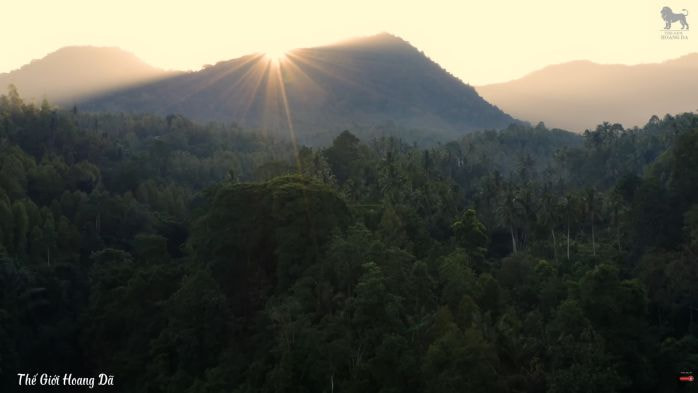
This journey takes us through some of the most remarkable jungle destinations in Vietnam, each offering a distinct sensory experience and a deeper understanding of the country’s natural heritage.
Nam Cat Tien National Park – The Living Heart of the Southern Vietnam Jungle
The moment you cross the river and step into Nam Cat Tien National Park, the outside world seems to dissolve behind you. Located across Dong Nai, Binh Phuoc, and Lam Dong provinces, Nam Cat Tien is one of the last and most significant remaining lowland jungle ecosystems in southern Vietnam. This is not a place you simply visit—it is a place you enter, slowly and respectfully, as if passing into a living, breathing realm governed by nature itself.
What defines the Vietnam jungle here is not just what you see, but what you hear. The soundscape is immediate and immersive. Cicadas pulse in rhythmic waves, birds call from unseen perches high above, leaves rustle under sudden movement, and distant animal cries echo faintly through the forest. These sounds form a continuous, organic symphony that never fully quiets, even at night. It creates a sense that the jungle is always awake, always aware.
Visually, Nam Cat Tien feels monumental. Ancient trees tower overhead, their massive trunks wrapped in vines and moss, their roots sprawling across the forest floor like natural sculptures. Sunlight filters through multiple layers of canopy, illuminating patches of undergrowth before disappearing again into green shadow. The Vietnam jungle here feels dense, humid, and deeply layered—an ecosystem shaped over thousands of years.
Nam Cat Tien is widely recognized as a biodiversity hotspot. More than 40 species listed in the global Red Book inhabit this protected area, along with over 60 rare orchid species hidden within the forest. Roughly half of the park is covered by evergreen forest, while bamboo groves, grasslands, and agricultural buffer zones form a complex ecological mosaic. Each zone supports different species, contributing to the park’s remarkable biological diversity.
One of the most unforgettable journeys within Nam Cat Tien is the trek to Bau Sau, also known as Crocodile Lake. Reaching this vast wetland requires commitment—either a long trek or a cycling journey along jungle trails that wind through dense vegetation. The physical effort only heightens the reward. At dawn or dusk, Bau Sau transforms into a reflective mirror, capturing the sky, clouds, and forest edge in perfect stillness. Beneath the surface, crocodiles move quietly, barely disturbing the water. It is one of the rare places where humans feel like visitors in a world that clearly belongs to wildlife.
Night wildlife safaris offer yet another dimension of the Vietnam jungle experience. Riding through the darkness with local rangers, guided only by headlights cutting narrow paths through the trees, you encounter a different rhythm of life. Deer freeze briefly in the light before vanishing into shadows. Wild boars, porcupines, civets, and nocturnal birds appear unexpectedly, reminding you how alive the jungle becomes after sunset. The experience is thrilling but also humbling, reinforcing how small humans are within this vast natural system.
The best time to explore Nam Cat Tien is from December to May, when dry weather makes trails more accessible. During the rainy season, paths become muddy and rivers swell, making travel more challenging—but also transforming the Vietnam jungle into something even more dramatic, vibrant, and untamed.
Cuc Phuong National Park – Where Vietnam Jungle Meets Deep History
Cuc Phuong National Park occupies a unique position in Vietnam’s natural and cultural landscape. As the country’s first national park, it holds both ecological importance and historical significance. Situated at the intersection of the Red River Delta, the Northwest Highlands, and the North Central region, Cuc Phuong represents a crossroads where geography, biodiversity, and human history converge.
The Vietnam jungle here feels ancient in a way that is immediately perceptible. Walking beneath the dense canopy, you sense layers upon layers of time. Sunlight filters through overlapping leaves, creating constantly shifting patterns on the forest floor. Massive trees—some estimated to be over a thousand years old—stand like silent guardians, their sheer size inspiring quiet awe.
Unlike many forests that feel purely wild, Cuc Phuong carries traces of human presence stretching back thousands of years. Archaeological discoveries in nearby caves reveal evidence of prehistoric habitation dating from 7,000 to 12,000 years ago. Stone tools, burial sites, and ancient artifacts suggest that early humans once lived closely intertwined with the Vietnam jungle, relying on it for shelter, food, and spiritual meaning.
From a biodiversity perspective, Cuc Phuong is exceptionally rich. The park is home to numerous endangered species, including rare primates, reptiles, and medicinal plants listed in Vietnam’s Red Book. Conservation and rescue centers within the park focus on protecting threatened species, particularly primates and turtles. Visiting these centers adds an educational dimension to the journey, allowing travelers to understand not just what the jungle contains, but why its protection matters.
Each year, hundreds of thousands of visitors come to Cuc Phuong to hike jungle trails, conduct scientific research, or simply escape urban life. Yet despite this popularity, the forest retains a powerful sense of reverence. There are moments—standing alone beneath towering trees or listening to rain fall on leaves—when Cuc Phuong feels untouched, timeless, and profoundly sacred. These moments define the essence of the Vietnam jungle.
Ban Ang Pine Forest – A Highland Vietnam Jungle with a Poetic Soul
Not every Vietnam jungle fits the image of dense tropical rainforest. In the highlands of Moc Chau, Son La Province, Ban Ang Pine Forest offers a softer, more poetic interpretation of jungle travel. Here, elevation and climate shape a completely different atmosphere—cool, airy, and meditative.
Tall pine trees stretch across rolling hills of red-brown earth, their straight trunks forming natural corridors that invite slow exploration. Walking through Ban Ang feels cinematic, as if each turn might reveal a carefully composed scene. Two tranquil lakes sit at the forest’s edge, reflecting the sky and trees in near-perfect symmetry, amplifying the sense of calm.
The air carries the subtle scent of pine resin, crisp and refreshing. Unlike the humid intensity of lowland jungle environments, this Vietnam jungle feels spacious and contemplative. In spring, nearby fields of white mustard flowers bloom, softening the landscape and adding layers of texture and color. During the full moon of the first lunar month, visitors may witness the “Xe Chả” festival of the Thai ethnic community, where cultural traditions blend seamlessly with the natural setting.
What makes Ban Ang special is how it integrates human life into the jungle landscape without overpowering it. Local people are warm and welcoming, and their presence enhances rather than disrupts the experience. Here, the Vietnam jungle is not just wilderness—it is a lived-in space, shaped gently by generations who understand its rhythms.
Tra Su Cajuput Forest – A Floating Vietnam Jungle in the Mekong Delta
Tra Su Cajuput Forest, located in An Giang Province, offers one of the most distinctive Vietnam jungle experiences in the country. This is a seasonally flooded wetland forest where land and water coexist in delicate balance, creating an ecosystem unlike any other.
The journey begins on a small boat, gliding slowly across water completely covered in bright green duckweed. Slender cajuput trees rise from the flooded ground, their reflections stretching across the water’s surface. The jungle here appears to float, shifting with the seasons and responding constantly to changes in water levels.
Tra Su plays a crucial role in regulating water flow and stabilizing the climate for the Bay Nui region. Ecologically, it is incredibly rich. More than 70 bird species inhabit the forest, including rare storks listed in Vietnam’s Red Book. Reptiles, mammals, fish, and aquatic plants form an interconnected web of life, each dependent on the precise balance of this wetland environment.
What defines the Tra Su experience is its stillness. Boats move quietly, leaving only gentle ripples behind. Birdsong echoes across open water, and the absence of engine noise allows the sounds of the Vietnam jungle to dominate. Time seems to slow here, encouraging reflection and deep appreciation for nature’s subtle complexity.
Floating through Tra Su feels less like sightseeing and more like meditation. It represents slow travel at its most authentic, offering one of the most peaceful and immersive Vietnam jungle encounters imaginable.
Tram Chim National Park – The Soul of Vietnam’s Wetland Jungle
Hidden within Dong Thap Province, Tram Chim National Park embodies the quiet grandeur of Vietnam’s wetland jungle. Unlike dense tropical forests or misty mountain canopies, Tram Chim unfolds beneath vast, open skies, where water and grass dominate the horizon. This is a landscape shaped not by towering trees, but by seasonal floods, reeds, and endless plains that change character with the rhythm of the Mekong.
During the dry season, from December to May, Tram Chim becomes one of Southeast Asia’s most important sanctuaries for migratory birds. Most notably, the park shelters nearly 60 percent of the world’s remaining red-crowned cranes. These birds, revered across Asia as symbols of longevity and grace, arrive in search of food and safety. Watching them move slowly through shallow wetlands—long legs mirrored in still water, crimson crowns glowing softly in the sun—is a moment of rare intimacy with the natural world.
Yet Tram Chim is not defined by cranes alone. The park supports hundreds of plant species adapted to flooded conditions, along with fish, reptiles, and smaller birds that form a tightly interwoven ecosystem. Boat journeys through the wetlands reveal lotus fields, melaleuca groves, and channels alive with movement just beneath the surface. Life here is subtle, patient, and deeply interconnected.
Cultural experience is inseparable from nature in Tram Chim. The wetlands shape local cuisine, livelihoods, and identity. Visitors often complete their journey by tasting regional specialties such as grilled snakehead fish wrapped in young lotus leaves or steaming hotpots filled with river fish and wild vegetables. These flavors carry the essence of the land itself, grounding the experience in both taste and tradition.
Pu Mat National Park – The Untamed Heart of the Central Vietnam Jungle
If Tram Chim reflects openness and calm, Pu Mat National Park represents the opposite extreme: dense, imposing, and profoundly wild. Located in Nghe An Province, Pu Mat spans nearly 200,000 hectares and forms the core of a UNESCO-recognized biosphere reserve. It is one of the last places in Vietnam where true primary forest still dominates the landscape.
The jungle here feels immense and uncompromising. Mountain ranges disappear into mist, rivers carve deep valleys, and the forest canopy stretches unbroken for kilometers. Human presence is minimal, and nature operates on its own terms. Over 2,400 plant species thrive in this environment, alongside hundreds of animal species—many of them rare, endangered, or still poorly understood.
Among Pu Mat’s most legendary inhabitants is the Saola, often referred to as the “Asian Unicorn.” This elusive mammal, discovered by science only in the 1990s, has rarely been seen by humans. Its presence alone elevates Pu Mat to near-mythical status among conservationists. The park is also home to langurs, gibbons, large cats, and countless bird and insect species that define the jungle’s complex food webs.
Traveling through Pu Mat is not casual tourism; it is expedition-style exploration. Trails are challenging, infrastructure is limited, and the jungle offers no conveniences. For scientists, researchers, and seasoned adventurers, this rawness is precisely the attraction. Pu Mat does not seek admiration—it exists in vast indifference, reminding visitors of nature’s scale, endurance, and autonomy.
Can Gio Mangrove Forest – A Coastal Vietnam Jungle on the Edge of the City
Few places illustrate resilience as clearly as Can Gio Mangrove Forest. Located just 50 kilometers from the center of Ho Chi Minh City, this coastal jungle thrives in saltwater conditions that would challenge most terrestrial ecosystems. Recognized by UNESCO as a biosphere reserve, Can Gio covers nearly 76,000 hectares of mangroves, nipa palms, and tidal channels.
This forest serves as a living barrier between land and sea. Its dense root systems protect southern Vietnam from storm surges, erosion, and rising tides, while also absorbing carbon and regulating coastal climates. From an ecological perspective, Can Gio is indispensable.
Exploring the forest by boat or elevated walkways feels like navigating a green maze. Twisting waterways reflect tangled roots and arching branches, while crabs, fish, and birds animate every corner of the ecosystem. Despite its proximity to urban sprawl, Can Gio retains a remarkable sense of calm. The air is fresher, the pace slower, and the jungle’s quiet persistence offers a striking contrast to the intensity of city life nearby.
Can Gio also stands as a powerful symbol of recovery. Large sections of the forest were destroyed during wartime, yet decades of restoration have allowed the mangroves to return stronger than before. Today, the forest is both a natural sanctuary and a testament to Vietnam’s long-term commitment to ecological rehabilitation.
Tam Dao National Park – A Mystical Mountain Jungle in Northern Vietnam
Rising above the Red River Delta, Tam Dao National Park occupies a realm where mist, mountains, and jungle converge. Often described as mystical, this forested region feels suspended between worlds. Thick fog rolls across ridgelines, trails vanish into cloud, and evergreen trees drip constantly with moisture from the air.
Covering nearly 35,000 hectares, Tam Dao is the largest ecological forest zone in northern Vietnam. Its elevation creates multiple climate layers, allowing subtropical and temperate species to coexist. Rare orchids cling to tree trunks, ancient tea trees grow undisturbed, and endemic plants and animals flourish in isolated niches.
The jungle here feels intimate and theatrical. Sunlight appears suddenly through breaks in the canopy, illuminating moss-covered stone steps or hidden streams. Temperatures remain cool throughout the year, making Tam Dao a favored retreat during Vietnam’s hot summers.
Hiking through Tam Dao is less about distance and more about atmosphere. Each turn in the trail reveals a new composition of sound, light, and texture. It is a jungle that invites reflection, imagination, and a sense of quiet wonder—qualities that have inspired generations of travelers, artists, and writers.
Bo Bo Pine Forest – A Gentle and Poetic Vietnam Jungle
Bo Bo Pine Forest in Quang Nam Province offers one of the most understated yet emotionally resonant jungle experiences in Vietnam. Rather than dense tropical vegetation, the landscape is defined by rolling hills covered in pine trees, open skies, and tranquil lakes that reflect the surrounding greenery.
The atmosphere here is expansive and calm. Wind moves softly through the pines, carrying a clean, resin-scented air that encourages stillness. Locals often describe Bo Bo as “a piece of Da Lat left behind in Central Vietnam,” and the comparison is apt. The forest shares Da Lat’s highland serenity without its crowds or commercial intensity.
Bo Bo is not a place of spectacle. It invites simple pleasures: picnicking beneath trees, camping under stars, photographing changing light across the hills, or sitting quietly as the day unfolds. In this sense, the forest offers something increasingly rare—space to disconnect from urgency and reconnect with oneself.
Why the Vietnam Jungle Matters
Across wetlands, mountains, coastlines, and highlands, the Vietnam jungle reveals itself in countless forms. Each forest, park, and reserve plays a distinct role in sustaining biodiversity, regulating climate, and preserving cultural memory. Together, they form a living network that supports both ecological balance and human identity.
Traveling through these jungles is not merely an aesthetic experience. It is an education in interdependence. Forests protect cities from storms, wetlands sustain fisheries, and ancient trees anchor histories older than written records. At the same time, local communities shape and are shaped by these environments, weaving culture into ecology.
In an increasingly accelerated world, the Vietnam jungle offers something essential: perspective. Whether drifting silently through wetlands, trekking into untouched wilderness, or standing beneath mist-covered canopies, visitors are reminded of nature’s resilience and fragility.
For those seeking journeys that challenge assumptions, slow the mind, and leave lasting impressions, the jungles of Vietnam remain open—ancient, adaptive, and quietly transformative.