When people speak about Saigon Vietnam, they often describe it as loud, fast, and endlessly energetic. While that is true, it is only the surface. Beneath the movement of motorbikes, the glow of streetlights, and the constant rhythm of daily life lies a city shaped by resilience, adaptation, and cultural depth. Saigon Vietnam is not a destination you simply visit—it is a place you experience with all senses engaged.
You May Also Like:
Officially known as Ho Chi Minh City, Saigon Vietnam remains deeply attached to its original name in the hearts and conversations of locals. The name “Saigon” carries history, emotion, and identity. To understand the city, you must understand how its past and present coexist, often within the same street.
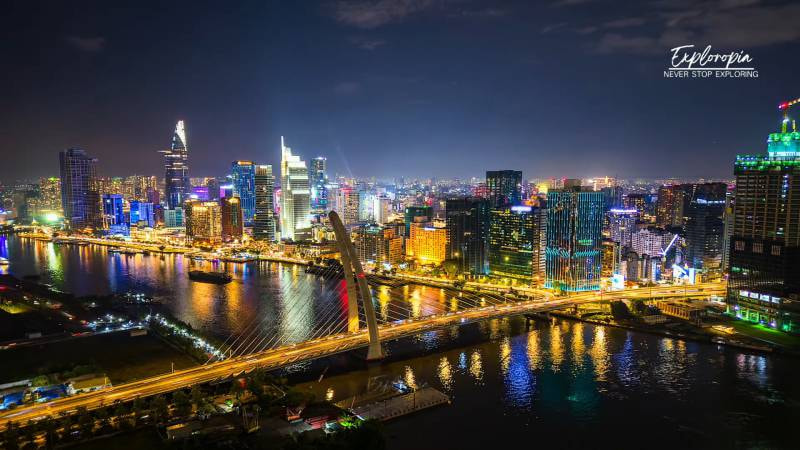
Where Saigon Vietnam Is Located — and Why That Location Shapes Everything
To understand Saigon Vietnam, you must first understand where it sits—both on the map and in the broader story of Southeast Asia. Saigon Vietnam is located in the southern part of the country, approximately 1,730 kilometers south of Hanoi when traveling by road. This distance is not merely geographic; it reflects a cultural and economic shift that becomes apparent the moment you arrive.
Geographically, Saigon Vietnam lies only about 50 kilometers inland from the East Sea. This proximity to the coast has long made the city a natural gateway for trade, migration, and exchange. Historically, rivers flowing toward the sea connected Saigon Vietnam to regional markets, while today, highways, ports, and international air routes continue that same function on a much larger scale.
Arriving in Saigon Vietnam, you immediately sense this outward-facing identity. The city does not feel isolated or inward-looking. Instead, it feels connected—to global supply chains, to neighboring provinces, and to distant cultures that have passed through its ports over centuries. Roads extend toward the Mekong Delta, leading south and west into Vietnam’s agricultural heartland. Other arteries push north and east, linking Saigon Vietnam to industrial zones in Dong Nai, Binh Duong, and Ba Ria–Vung Tau.
This strategic location has transformed Saigon Vietnam into one of Southeast Asia’s most important transportation and commercial hubs. Container ports operate around the clock. Airports connect the city directly to Asia, Europe, and beyond. Rivers remain busy with cargo and local boats alike. Geography here is not abstract—it is lived daily, shaping how the city breathes, moves, and grows.
More than anything, this location explains Saigon Vietnam’s defining personality. It is open rather than guarded. It absorbs influences rather than resisting them. It is constantly in motion, rarely content to remain as it was yesterday.
Landscape and Urban Form: A City Built on Transition
The physical landscape of Saigon Vietnam reflects its position between two distinct regions: Southeast Vietnam and the Mekong Delta. This transitional geography creates a city without sharp elevation changes, but full of subtle shifts. The terrain slopes gently downward from north to south and from west to east, a fact that has influenced everything from drainage systems to settlement patterns.
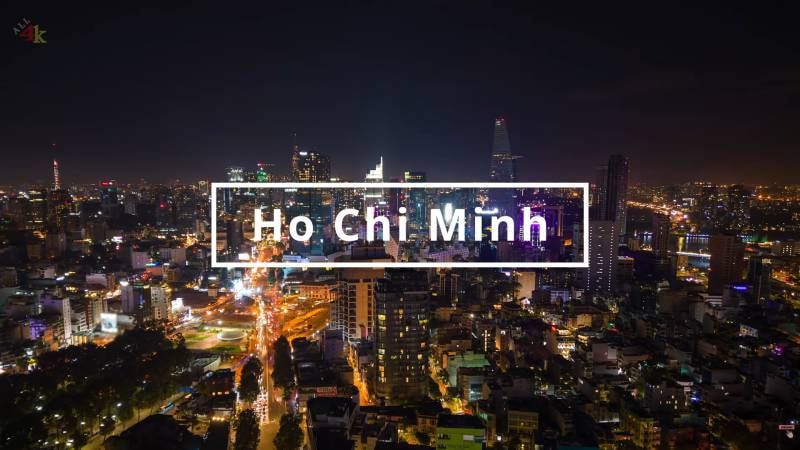
In the northern and northeastern areas, elevations reach between 10 and 25 meters above sea level. These slightly higher grounds historically attracted early development and administrative centers. Meanwhile, the southern and southwestern districts sit much lower—some areas barely a meter above sea level—making them more vulnerable to tides, flooding, and seasonal changes.
Water defines Saigon Vietnam as much as land. Rivers, canals, and creeks cut through the city, sometimes hidden behind buildings, sometimes opening into wide, reflective corridors. Districts such as Binh Chanh, Nha Be, and Can Gio still feel deeply connected to wetlands and mangroves. In Can Gio especially, the city fades into a coastal biosphere where mangrove forests replace concrete, reminding visitors how closely Saigon Vietnam remains tied to natural systems.
Urban development here has never followed a single rigid plan. Instead, Saigon Vietnam feels layered and adaptive. Colonial-era buildings stand beside modern office towers. Traditional tube houses line alleys that open unexpectedly into glass-fronted cafés. A quiet neighborhood temple might sit only meters from a high-rise apartment complex.
This visual contrast is not chaotic—it is expressive. Saigon Vietnam shows its history openly, without attempting to erase older layers. French colonial villas coexist with post-war architecture and contemporary skyscrapers, creating a cityscape that feels lived-in rather than curated.
Walking through Saigon Vietnam, you rarely move in straight lines. Narrow alleys twist and branch, revealing family homes, street kitchens, and hidden courtyards. These spaces are not accidents; they are the result of decades of organic growth, shaped by migration, commerce, and necessity. The city does not impose itself—it adapts.
Population and Rhythm: Life at Full Speed
Saigon Vietnam is the largest city in the country by population and urban scale. Official figures place the population at nearly nine million residents, but these numbers only tell part of the story. When accounting for temporary workers, migrants, students, and unregistered residents, the real population likely exceeds fourteen million.
This density defines the rhythm of daily life in Saigon Vietnam. The city rarely feels quiet. Even in the early morning hours, movement begins before dawn. Street vendors prepare their stalls as the sky lightens. Coffee shops open early, filling sidewalks with plastic stools and low tables. Motorbikes stream through intersections like flowing water.
Midday brings heat, humidity, and a brief slowing of pace—but never a complete pause. Construction continues. Markets remain open. Offices hum with activity. Saigon Vietnam does not shut down for lunch; it shifts gears.
As evening approaches, the city enters a second life. Food stalls appear where empty sidewalks once were. Neon lights flicker on. Entire streets transform into open-air dining rooms. In Saigon Vietnam, night is not an ending—it is a continuation, often livelier than the day.
Despite its scale, Saigon Vietnam feels surprisingly intimate. Conversations with strangers happen easily. People give directions willingly. Vendors remember returning customers. The city’s energy does not come from anonymity but from shared momentum—millions of individuals moving forward together, each with their own purpose.
This constant motion can feel overwhelming at first. But over time, many travelers find themselves drawn into the rhythm. Saigon Vietnam teaches you to move with it rather than against it.
A City Shaped by History and Resilience
The modern energy of Saigon Vietnam is inseparable from its long and complex history. Long before it became a major urban center, the area was known as Prey Nokor, a trading port under Khmer influence. Its transformation accelerated in the late 17th century when Vietnamese settlers arrived, marking the beginning of its role as a southern frontier city.
Under French colonial rule, Saigon Vietnam was reshaped into an administrative and commercial capital. Wide boulevards, European-style buildings, and infrastructure projects left an imprint that remains visible today. The city earned the nickname “Pearl of the Far East,” reflecting its importance within the colonial system.
The mid-20th century brought war, division, and upheaval. Saigon Vietnam became the capital of South Vietnam, experiencing rapid growth alongside intense conflict. The events of April 30, 1975, marked a turning point not only for the city but for the entire country.
Renamed Ho Chi Minh City, Saigon Vietnam entered a new era of reunification and reconstruction. Yet even as the official name changed, many residents continued to call it Saigon—a reflection of emotional continuity rather than political statement.
Today, Saigon Vietnam carries its past with quiet confidence. Museums, monuments, and preserved buildings coexist with modern developments. The city does not erase its scars; it integrates them into its identity.
Why Saigon Vietnam Matters to Travelers
What makes Saigon Vietnam compelling is not a single landmark or attraction. It is the accumulation of moments. A morning coffee on a busy street corner. A sudden rainstorm that sends people laughing under awnings. The smell of grilled meat drifting through an alley at night.
Saigon Vietnam is not a city that performs for visitors. It continues its life regardless of who is watching. Travelers who try to “see everything” often miss its essence. Those who slow down—who sit, observe, and participate—begin to understand it.
Its location explains its openness. Its geography explains its adaptability. Its population explains its relentless energy. Together, these elements form a city that is never finished.
Saigon Vietnam matters because it represents modern Vietnam in motion: pragmatic, resilient, creative, and forward-looking. It is a place where history informs the present, but never limits the future.
Saigon Vietnam Through History: From Prey Nokor to Modern Metropolis
To experience Saigon Vietnam fully, you must understand its layered history. Long before it became Saigon, the area was known as Prey Nokor, a trading port under Khmer influence. Its strategic position attracted settlers, merchants, and eventually Vietnamese expansion southward.
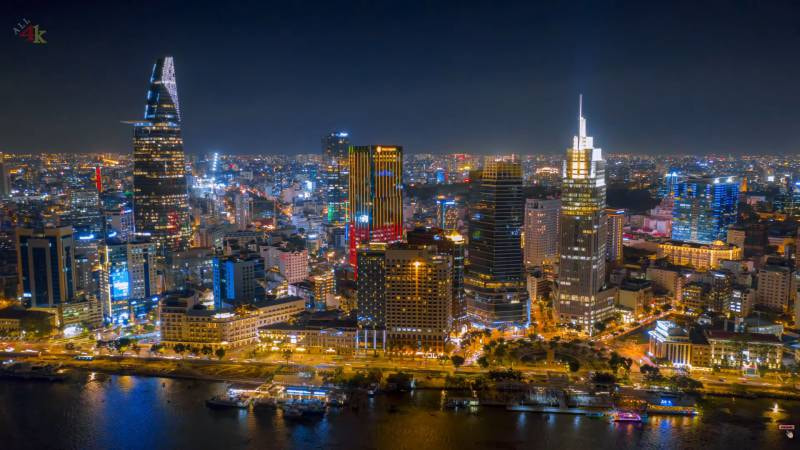
In 1698, Nguyen Huu Canh officially established Gia Dinh, marking the beginning of Saigon’s transformation into a Vietnamese administrative center. Over time, Saigon Vietnam grew in importance, eventually attracting French colonial interest.
Under French rule, Saigon developed rapidly. Wide boulevards, grand buildings, and European urban planning reshaped the city. It earned the nickname “The Pearl of the Far East,” reflecting its status as one of the most modern cities in Asia at the time.
After World War II, Saigon Vietnam became the capital of South Vietnam. The city expanded further, absorbing rural migrants and international influence. Following reunification in 1975, it was renamed Ho Chi Minh City, but the name Saigon never disappeared from everyday use.
Today, Saigon Vietnam carries all of these histories at once. They are visible in architecture, neighborhoods, and even in the way people speak about the city.
Administrative Structure: A City of Many Identities
Saigon Vietnam is administratively complex. It consists of one city within the city (Thu Duc City), sixteen urban districts, and five suburban districts. Each area has its own character.
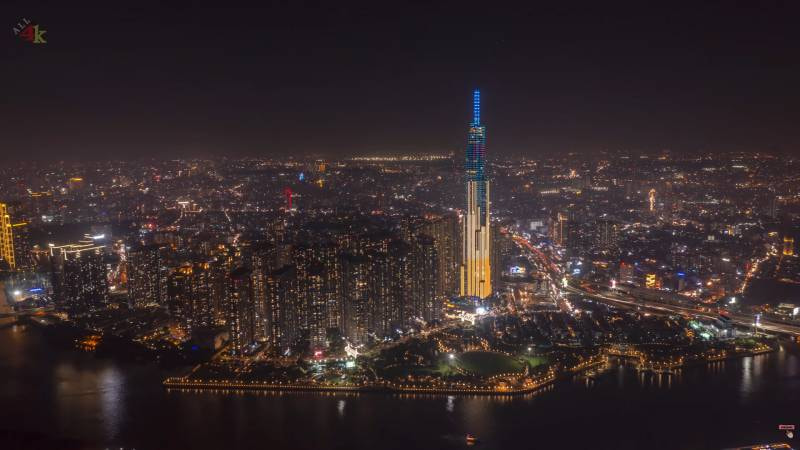
Central districts like District 1 and District 3 reflect colonial heritage and modern commerce. District 5 carries strong Chinese cultural influence, especially in Cholon. District 7 showcases newer urban planning and international communities. Outlying districts like Cu Chi and Can Gio reveal agricultural roots and ecological significance.
This diversity means Saigon Vietnam is not one city, but many overlapping cities—each offering a different experience.
Street Food in Saigon Vietnam: Eating as a Way of Understanding the City
In Saigon Vietnam, street food is not a novelty, a trend, or something reserved for visitors. It is the city’s most honest language. To eat on the street here is not simply to satisfy hunger—it is to participate in the rhythm of daily life. Meals do not wait for formal settings or fixed schedules. They appear wherever people gather: on sidewalks, at street corners, under trees, beside offices, schools, and apartment blocks.
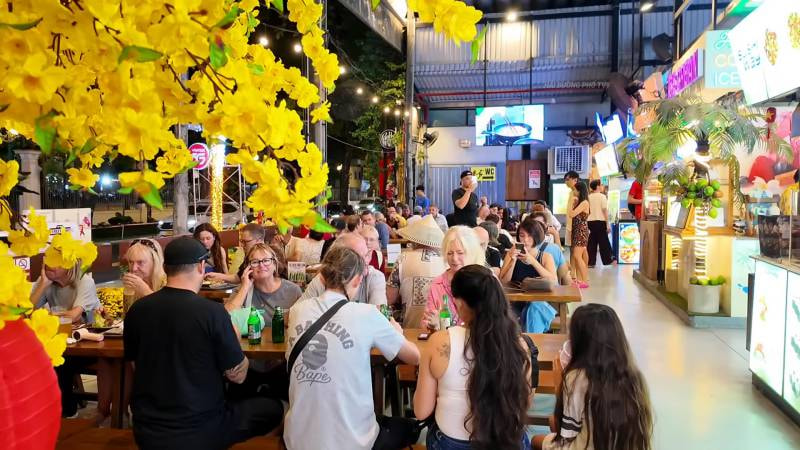
From early morning until late at night, Saigon Vietnam feeds itself continuously. The act of eating blends seamlessly into work, conversation, rest, and movement. Plastic stools are pulled closer together. Bowls are passed across small metal tables. Steam rises into traffic-filled air. In these moments, Saigon Vietnam reveals itself more clearly than any museum or monument ever could.
Street food here is democratic. Office workers, students, construction laborers, and business owners sit side by side, sharing the same dishes. Prices remain accessible. Flavors remain bold. And each dish carries layers of history—migration, adaptation, and cultural exchange—compressed into a single bite.
To explore Saigon Vietnam through street food is to understand how the city thinks, remembers, and evolves.
Pha Lau: Rich, Comforting, and Unapologetically Saigon
Few dishes represent the personality of Saigon Vietnam as clearly as pha lau. This is not a delicate or subtle dish. It is rich, heavy, and deeply comforting—designed to be eaten slowly, often while sitting on a low stool beside a busy street.
Pha lau is made from braised offal—typically stomach, intestines, heart, and sometimes tongue—cleaned thoroughly and simmered for hours. What sets Saigon Vietnam’s version apart is the use of coconut milk, which softens the intensity of the meat and adds a subtle sweetness. Star anise, cinnamon, and other spices deepen the broth, creating a flavor that is complex but familiar.
In Saigon Vietnam, pha lau is often eaten in the afternoon or evening, when the heat begins to fade. Some people dip chunks of crusty bread into the thick sauce. Others eat it plain, savoring the texture of each cut. Lime juice and chili are added according to personal preference.
What makes pha lau special is not just its taste, but what it represents. It reflects Saigon Vietnam’s willingness to embrace strong flavors and unconventional ingredients. It also reflects the city’s history of Chinese influence and southern adaptation. Pha lau is not refined, and it does not try to be. Like Saigon Vietnam itself, it is confident in its identity.
Bot Chien: A Shared Sidewalk Ritual
As evening falls in Saigon Vietnam, the sound of metal spatulas scraping against flat grills becomes familiar. This is the sound of bot chien being prepared—a dish that is simple in concept but deeply satisfying in execution.
Bot chien consists of rice flour blocks, pre-steamed and then cut into cubes. These cubes are fried until crispy on the outside and soft on the inside, then mixed with beaten eggs, green onions, and sometimes shrimp or sausage. The dish is served with shredded green papaya and a tangy soy-based sauce.
Bot chien is not eaten in a hurry. It is a dish that invites lingering. People gather around small carts, watching the vendor work the grill with practiced movements. Conversations unfold naturally. The act of eating bot chien in Saigon Vietnam feels communal, even if you arrive alone.
This dish reflects the everyday nature of street food in Saigon Vietnam. It is affordable, filling, and familiar. Many locals associate bot chien with childhood memories—after-school snacks or late-night meals with friends. For travelers, eating bot chien is an easy way to step into that shared cultural space.
Com Tam: The Emotional Center of Saigon Vietnam
If Saigon Vietnam had a single dish that could represent its soul, it would be com tam. Broken rice with grilled pork may sound simple, but in Saigon Vietnam, it is anything but ordinary.
Originally, broken rice was considered a lower-grade product—grains fractured during milling and sold cheaply. In the south, where resourcefulness shaped cuisine, these fragments became the foundation of an iconic dish. Today, com tam is eaten by everyone, regardless of background.
A typical plate of com tam in Saigon Vietnam includes grilled pork chop, a fried egg, shredded pork skin, pickled vegetables, and scallion oil. Fish sauce ties everything together, balancing salt, sweetness, and acidity.
What makes com tam special is its versatility. It can be breakfast, lunch, or dinner. It can be eaten quickly at a street stall or enjoyed slowly in a small family-run shop. Every vendor has a slightly different marinade, grilling technique, or sauce ratio.
Eating com tam in Saigon Vietnam feels grounding. It is filling without being heavy, familiar without being boring. More importantly, it tells a story of transformation—how something humble became beloved. That story mirrors Saigon Vietnam itself.
Hu Tieu: Lightness from the Mekong Delta
Hu tieu represents the influence of the Mekong Delta on Saigon Vietnam’s food culture. This noodle dish is lighter than pho, clearer than many northern soups, and highly customizable.
In Saigon Vietnam, hu tieu can be served dry or with broth. The noodles are thin and slightly chewy, topped with slices of pork, shrimp, quail eggs, and fresh herbs. The broth, when included, is clean and subtly sweet, often made from pork bones and dried seafood.
Hu tieu reflects the southern preference for balance rather than heaviness. It is a dish that does not overwhelm. Instead, it refreshes. Many locals eat hu tieu in the morning, when the city is just waking up and the air still feels manageable.
For travelers, hu tieu offers a gentler introduction to Saigon Vietnam’s street food scene. It shows how regional flavors converge in the city, blending rural influences with urban pace.
Mi Vit Tiem: Chinese Heritage in Every Bite
Saigon Vietnam has a long history of Chinese migration, particularly in areas like Cholon. Mi vit tiem is one of the clearest culinary expressions of that heritage.
This dish features egg noodles served with slow-braised duck in a dark, herbal broth. The duck is tender, rich, and aromatic, infused with medicinal spices that create depth without bitterness. Pickled vegetables and greens balance the dish.
Mi vit tiem is not flashy. It is deeply comforting, often eaten in modest shops that have served the same recipe for decades. In Saigon Vietnam, these establishments are living archives—places where tradition continues quietly.
Eating mi vit tiem connects you to a different layer of the city. It reminds you that Saigon Vietnam is not defined by a single culture, but by overlap and coexistence.
Banh Mi Chao: Breakfast With Attitude
Banh mi chao turns breakfast into a performance. Served in a small sizzling pan, this dish includes eggs, pate, sausages, meatballs, or beef, all swimming in a savory sauce. A crusty baguette is used to scoop everything up.
In Saigon Vietnam, banh mi chao is loud, aromatic, and satisfying. The pan arrives still crackling. The smell draws attention from nearby tables. Eating it feels indulgent, even on an ordinary morning.
This dish captures Saigon Vietnam’s flair for reinvention. It borrows from French bread, local ingredients, and street-side practicality. It is casual, but memorable.
Eating as Exploration in Saigon Vietnam
Street food in Saigon Vietnam is not about checking dishes off a list. It is about observing, sitting, tasting, and repeating. The same dish can feel different depending on the street, the vendor, the time of day.
To eat here is to slow down and pay attention. It is to watch how food connects people. It is to understand that Saigon Vietnam does not separate daily life from pleasure.
In the end, street food is not just something you consume in Saigon Vietnam. It is something you experience—and something that stays with you long after you leave.
Exploring Saigon Vietnam: Landmarks and Lived Spaces
Saigon Vietnam offers a mix of iconic landmarks and everyday spaces that feel equally meaningful.
The Reunification Palace stands as a symbol of modern Vietnamese history. Notre Dame Cathedral and the Central Post Office reflect colonial architecture and craftsmanship. Ben Thanh Market represents the city’s trading roots and daily commerce.
But some of the most memorable experiences happen elsewhere: in Nguyen Hue Walking Street at night, in Book Street near the cathedral, or in narrow alleys where life unfolds unfiltered.
At night, Saigon Vietnam transforms. Bui Vien becomes loud and chaotic, while Nguyen Hue feels open and communal. Landmark 81 rises quietly in the distance, symbolizing the city’s future.